– 19 November 2025
In the world we live in today, language is often used as a tool to help us understand one another. It is one of the most powerful and efficient ways humans use to share ideas, thoughts, build communities, and form connections. Yet in many professional institutions, language becomes a barrier that reinforces social hierarchies deciding who is in and who is out. The “Standard English” myth- the belief that there is a single idealized form of English that is universally accepted and correct- has shaped people’s perceptions of ability, worth, and intelligence. More specifically how people are treated in schools, workplaces, and healthcare settings, this myth not only marginalizes people who speak different languages or dialects, but also creates a system where fluency in “Standard English ”is honored while other Englishes are criticized. In many cases, this linguistic bias has huge consequences such as affecting how people are treated, what opportunities are given, and how they see themselves.
One of the most severe consequences of the Standard English myth is the assumption that one’s fluency in English reflects their intelligence. Not only is this belief socially damaging, but it can also be seen in data. In the article A Measure of Prejudice Against Accented English by Ura, Preston, and Mearns, the authors developed the Measure of Prejudice Against Accented English Scale, ( also known as the MPAAE), which is a tool that measures the prejudice people face based on their English and accents. Their findings have revealed that “speakers with accents are less trustworthy and competent at delivering accurate information” (541). This study has shown that people with accents were ranked lower, despite the actual knowledge that they have. For example, a student could be doing a presentation about the research they did with their accent being there. The content they present would be accurate and impressive, but due to their accent, their peers and even teachers may have doubts thinking that they are not that knowledgeable in the topic. This judgment can affect the students’ grades, confidence, and how people interact with them during their school career. Another example can be in the workplace: an employee presents their report to their boss, but their work would get overlooked with the assumption that they didn’t do it properly. This finding suggests that, in many evaluation processes, the evaluators often base credibility on one’s accent rather than the content they present, reinforcing the idea that intelligence is linked to how someone sounds rather than what they know. Such findings reveal the disturbing reality that linguistic bias plays in disregarding one’s skill, allowing shallow judgments to shape perceptions of credibility.
Similarly, Clark, Easton, and Verdon (2021) also found a similar connection in their article The Impact of Linguistic Bias upon Speech-Language Pathologists’ Attitudes towards Non-Standard Dialects of English. In their study, the relationship between speech-language pathologists (also known as SLPs) and their clients was examined closely to see if there was an impact on their professional judgment. Speech-language pathologists work with people of all ages evaluating and treating their communication with the goal of improving their patients’ ability to communicate effectively. It was revealed that “SLPs were likely to give poorer ratings to speakers who were from a different linguistic background to themselves” (545). Real effects can come from such bias being evident in the workspace, especially in a healthcare institution. Such as inadequate care, wrong diagnosis, and exclusion from certain services offered. Think about this: a patient is having an appointment with their SLP discussing the problems they face with how they communicate to other people. But the SLPs note their speech as unclear due to their accent, resulting in the patient not receiving the right treatment they deserve. When linguistic fluency is interpreted as being smart, institutions and society can misjudge someone which is unfair. This pattern emphasizes how deeply rooted linguistic bias is in a professional setting and how it can have a huge impact on someone’s health. One’s fluency in “Standard English” should not be associated with their intelligence since there is no correlation between the two.
More specifically, educational/professional institutions and educators play into this narrative of reinforcing this linguistic bias. Oftentimes when kids are in the classroom, they often hear their teachers say to them that their way of speech is either “right” or “wrong” leaving such a strong impression on how they should talk. Wolfram (2013), in Challenging Language Prejudice in the Classroom, reinforces this point through a classroom observation. He notes that “We are socialized into a simple dichotomy: Language forms are right or wrong” (28), and “the recognition of language patterns and governing rules made the students for the first time that their varied use of ‘standard’ English did not indicate a lack of intelligence” (29-30). This recognition that their own dialects are valued and validated challenges the assumption that linguistic difference equals intellectual inferiority.
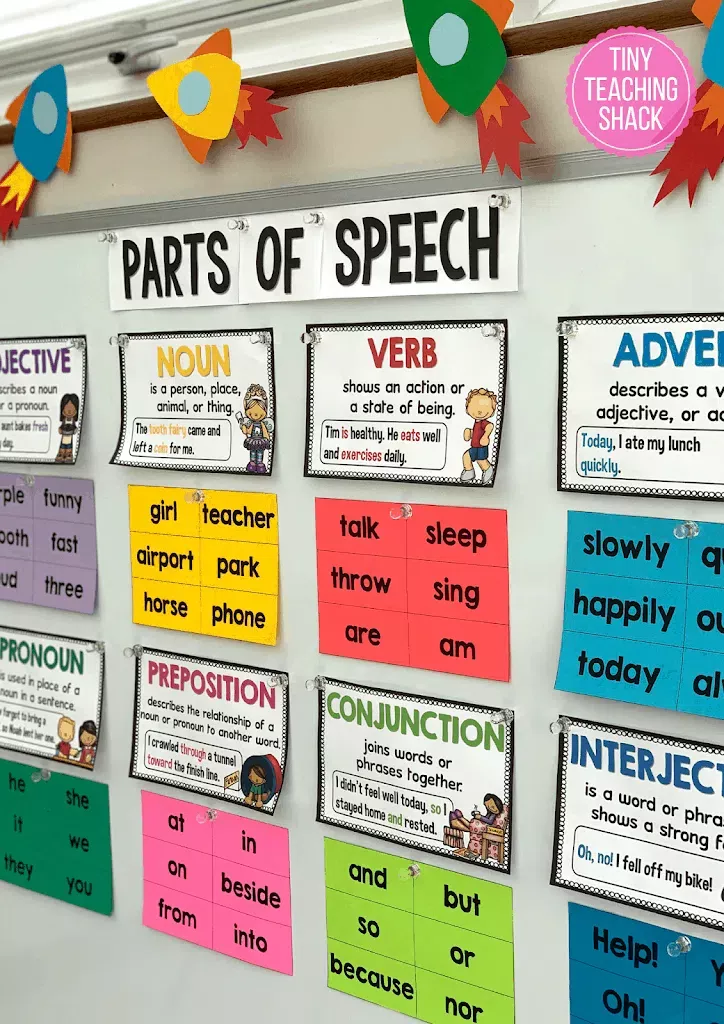
Additionally, Clark et al. (2021) also demonstrate how this narrative is enforced to kids at such a young age. They explained that “perspective socialisation through institutions, such as schools, supports children to develop the range of registers required for communicative competence in mainstream context” (552). To simply put it, in settings such as schools, students are trained to speak in a way that fits into societal norms and not their true selves leaving them to self-alienate. For instance, a child using AAVE (African American Vernacular English) in their home and bringing it to school may constantly be corrected by their teacher. And over time, this could lead to them completely stop using AAVE or to them having to code-switch depending where they are in fear of being looked at differently. This kind of pressure to conform to one way of speaking can lead to lasting psychological effects like shame and self-censorship. As a consequence students may grow up and feel as if their real voices are not credible. Educational institutions need to realize the harm that they are inflicting onto kids. When these biases are reinforced at such a young age, it stays with them until adulthood. Instead, educational institutions need to challenge this myth encouraging linguistic inclusion.
Language bias doesn’t only affect individuals, it also supports an unfair system that serves as a form of exclusion. Ura et al (2015) explains that “Dynamism items indirected that accented speakers lack activeness and liveliness, which may lead to a poor assessment of their leadership potential” (540). When someone has an accent, it serves as a way to judge someone’s background, and not only their speech. This kind of bias can block someone from getting leadership roles, job offers, or even just respect. If someone is seen as less skilled just because of their accent, opportunities that they deserve can pass them by. Over time, this creates a system where only people who speak “Standard English” will be positioned in such roles leaving others behind. This demonstrates how certain people benefit from the hierarchy that the Standard English myth creates while others don’t because they don’t match the “requirements”. Linguistic bias acts like a barrier not allowing people to truly understand or respect others with different speaking backgrounds making an unfair social hierarchy.
Linguistic bias is not only about unfair judgements, it’s a system that affects people’s day to day life. It affects how they are treated in schools, healthcare, and other institutions. The belief that “Standard English” is the only “correct” way to speak leads to unfair assumptions about one’s intelligence, worth, and ability. These biases are taught to kids at such a young age which can play a part on their view of other people in the future. This causes harm by making people feel as if their voices don’t matter and by making them think that they have to change the way they speak in order to succeed in life.
The works from Clark et. al (2021), Ura et al. (2015), and Wolfram (2013) all show that linguistic bias is reinforced by institutions and can have real life consequences. It limits opportunities, creates a social system, and keeps real voices from being heard. However, this system can be destroyed. By taking the initiative to teach students that their dialects and accents matter from a young age, teaching professionals to recognize their own biases in their work, and creating a society where everyone is respected, the Standard English myth can be challenged and possibly removed.
At the end of the day, language is supposed to connect us and not set us apart. Everyone has the right to be heard and respected regardless of how they speak. For this to work, the idea that fluency in Standard English equates to intelligence needs to be cancelled and the diversity of different linguistics needs to be welcomed with open arms.

Works Cited
Clark, Emma Louise, et al. “The Impact of Linguistic Bias upon Speech-Language Pathologists’ Attitudes towards Non-Standard Dialects of English.” Clinical Linguistics & Phonetics, vol. 35, no. 6, June 2021, pp. 542–59. EBSCOhost, https://doi-org.ccny-proxy1.libr.ccny.cuny.edu/10.1080/02699206.2020.1803405.
Ura, Masako, et al. “A Measure of Prejudice Against Accented English (MPAAE).” Journal of Language & Social Psychology, vol. 34, no. 5, Oct. 2015, pp. 539–63. EBSCOhost, https://doi.org/10.1177/0261927X15571537
Wolfram, Walt. “Challenging Language Prejudice in the Classroom.” Education Digest, vol. 79, no. 1, Sept. 2013, pp. 27–30. EBSCOhost,

